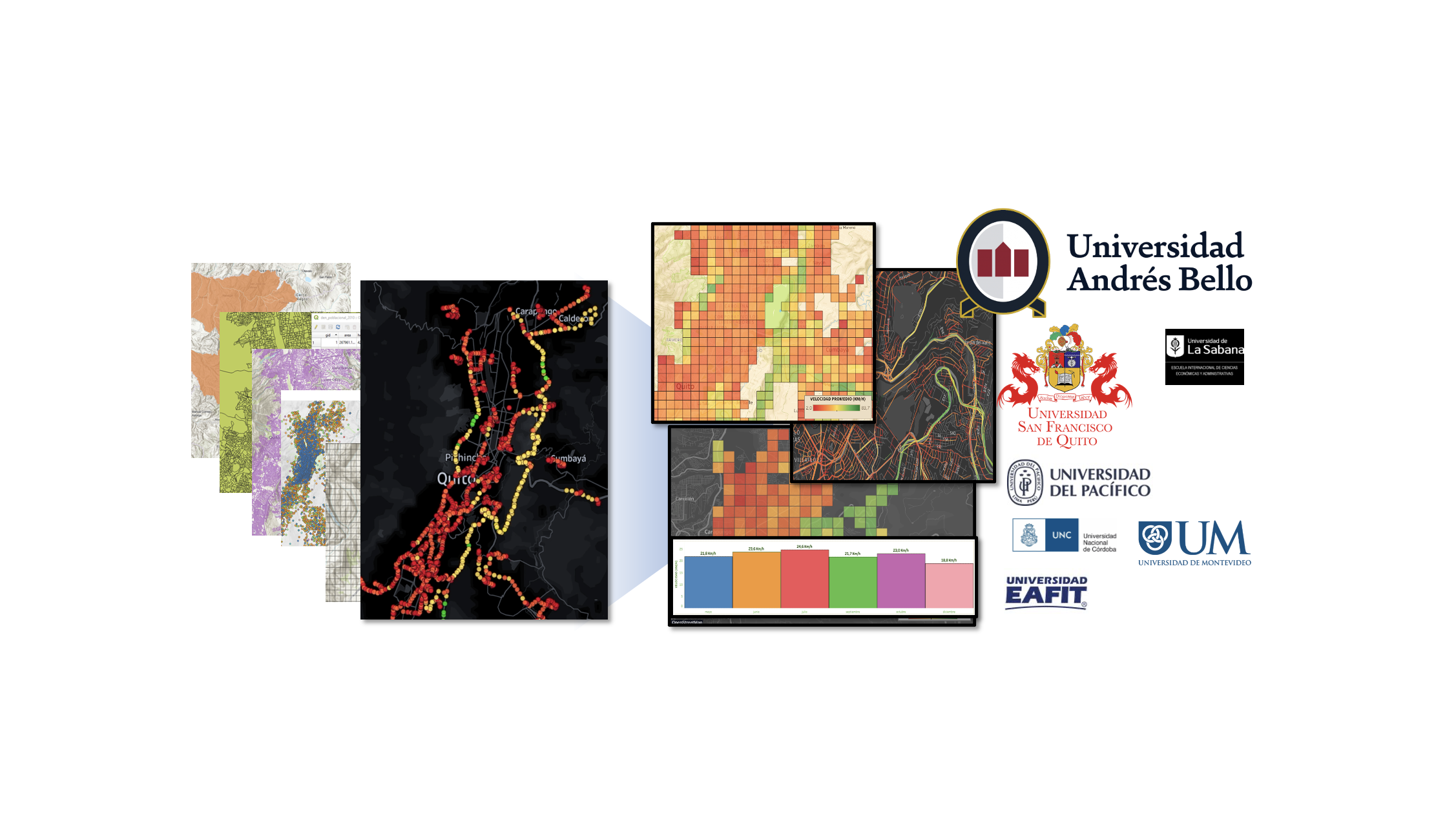
The Observatory of Urban Freight Transport (OTUC) Quito is a technological tool for systematically collecting data from Quito's urban cargo transport system and its conversion into information and trends over time. The observatory creates a collaborative space that invites companies, policymakers, and academia involved in urban freight transport dynamics to benefit from the collected information and generate the enabling conditions to monitor and validate their behavior, efficiency, and evolution.
This project, which is of great value to stakeholders from the private, public, and academic sectors, supports developing and understanding cargo transport/distribution dynamics and last-mile logistics in densely populated urban areas. In an environment with complex transport conditions, such as the city of Quito, the systematic collection of data from the main actors allows the identification of global trends on urban freight transport through aggregated information for the informed design of private policies for the company and public policy in conjunction with public sector authorities. Additionally, it facilitates identifying specific information of each company that will allow a complete analysis of the specific trends of interest of its cargo transport and distribution operations in an urban context.
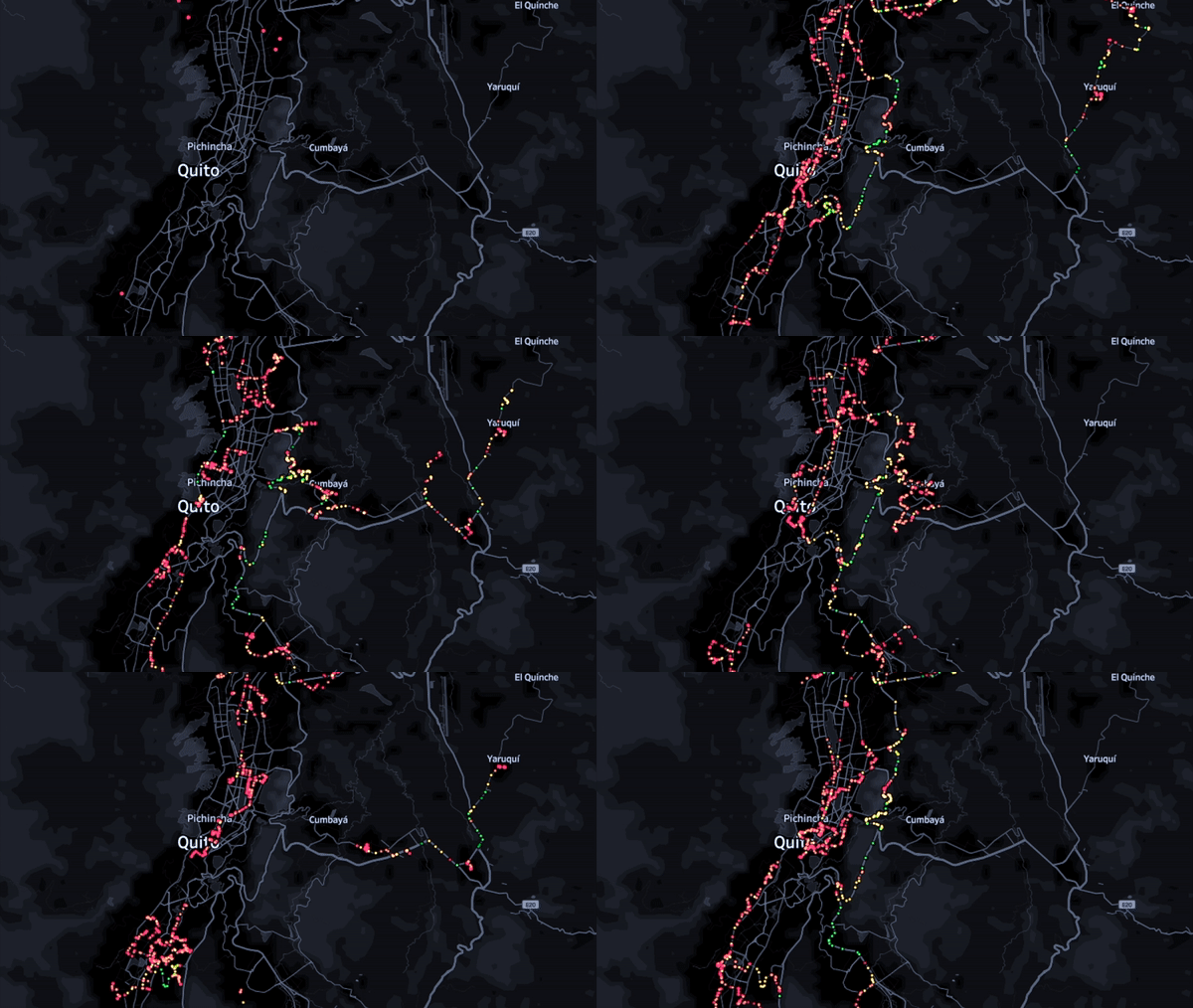
Dashboards and analysis of the Observatory
Specifically, this type of information will allow organizations to know the behavior of transport/distribution operations in greater detail. The observatory provides reports and analytics on particular logistics operations providing the ability to contrast performance indicators of companies with global indicators of cargo logistics operations in the city. This is done through aggregated information from the companies that collaborate with OTUC-Quito. Some detailed benefits of participating in the Observatory of Urban Freight Transport (OTUC) are:
1. Systematic evaluation of the operation of vehicles and fleet over time for the generation and visualization of dynamic operations indicators.
2. A better understanding of the "operations yard" that represents the urban environment and ecosystem of the city.
3. Monitoring the impact of new initiatives over time.
4. Identification of possible savings in last-mile operations and justification of fuel consumption.
5. Digital transformation and Logistics 4.0. facilitator.
6. Benchmarking logistics operations at the urban level (information that will enrich as more companies collaborate with us).
7. Access the possibility of developing new initiatives and projects in collaboration with the USFQ and other academic partners of the MIT SCALE network (Supply Chain and Logistics Excellence Network) LATAM.
The OTUC Observatory is an initiative that was born in the Center for Transportation and Logistics of Universidad Andrés Bello in Santiago de Chile. This center fulfills the role of the technical organization in the development and deployment of the tool, which is promoted in Ecuador by Universidad San Francisco de Quito USFQ. The observatory is currently being successfully implemented in different cities of the region in countries such as Chile, Ecuador, Colombia, Peru, Uruguay.
For more information, contact us at our institutional email catena@usfq.edu.ec
This website was created with Mobirise